Five Digital Marketing Strategies Every Health System Should Prioritize

Healthcare marketing is increasingly being asked to answer a practical question: How many new patients did this investment generate, and what did each acquisition cost? Brand recognition still matters, but hospitals, health systems and medical centers face growing pressure to connect advertising with appointments, completed visits and service line revenue. Current industry research reflects tighter budget scrutiny and rising expectations to demonstrate marketing ROI.
The strongest digital strategy connects clinical expertise with patient needs, physician referrals and measurable business outcomes. These five priorities should guide that effort.
1. Market specific areas of clinical expertise
“Excellent care close to home” gives patients little reason to choose one organization over another. A stronger strategy begins with specific therapeutic and procedural areas where the organization offers meaningful expertise.
These might include structural heart procedures, orthopedic surgery, comprehensive cancer care, advanced imaging, bariatric surgery or minimally invasive treatments. Prioritize services based on clinical strengths, community demand, appointment capacity and growth objectives.
Each priority deserves its own content, audience strategy and conversion path. Someone considering knee replacement needs different information from someone researching a newly diagnosed heart condition.
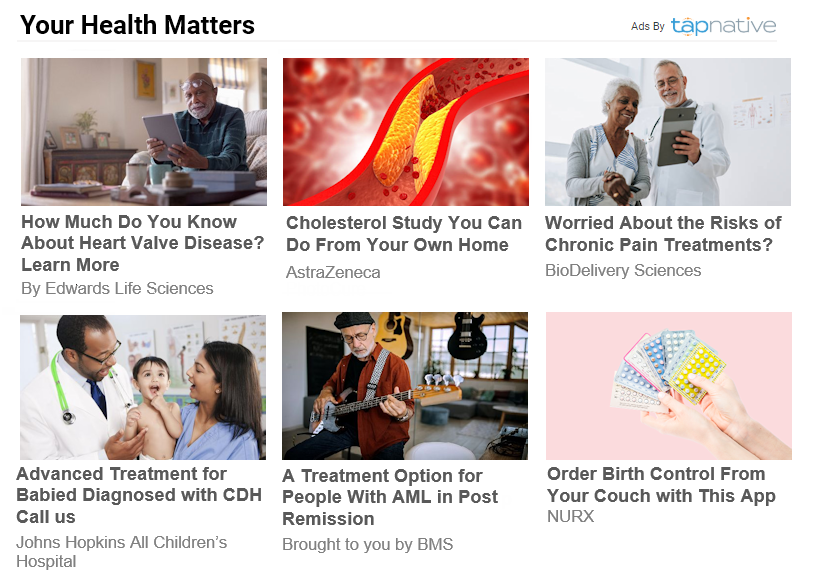
Build articles, physician videos and treatment explainers around those questions. Native ads can introduce this content to relevant audiences, helping patients discover expertise through useful information. The destination should explain treatment options, introduce specialists and provide a clear next step.
2. Reach patients while they research relevant topics
Direct-to-consumer contextual marketing connects your message with what someone is reading at that moment. An article about persistent joint pain creates an opportunity to introduce orthopedic expertise. Content about atrial fibrillation provides a relevant setting for discussing electrophysiology services.
Context provides relevance without requiring an advertiser to assume that every reader has a particular diagnosis. The audience may include patients, caregivers or people gathering information for someone else.
Native advertising is particularly useful here because it can lead with education. “When should you consider a knee replacement?” offers a reason to engage before asking someone to schedule a consultation.
Match the advertisement, article and next step. A campaign about lung cancer screening should lead to screening information, eligibility guidance and scheduling options. Sending everyone to a general homepage wastes the attention earned by a relevant message.

3. Build a separate strategy for referral-generating HCPs
Patient marketing and healthcare professional marketing serve different decisions. Patients need help understanding care options. Referring clinicians need confidence that a specialist or program can address their patients’ needs.
Identify specific PCPs and other healthcare professionals whose specialties, locations and patient populations make them relevant referral partners. A cardiovascular program might prioritize primary care physicians and community cardiologists. An advanced orthopedic service could engage PCPs, sports medicine clinicians and physical therapists.
Use professional content to explain referral criteria, available procedures, specialist credentials and access. Native ads can distribute physician interviews, clinical program updates and educational articles to relevant professional audiences.
Make referrals straightforward. Provide clear contact information, referral instructions and expectations for communication. Measure qualified referrals and completed patient visits alongside engagement. A clinician reading your article is a useful signal, but the ultimate objective is an appropriate patient reaching the right care.
If your digital advertising provider offers physician-level data (PLD) reporting, your team should use it to follow up with HCPs who clicked your ads. Calls, messages, emails and postcards can thank them for their interest, reinforce your key messages and build stronger referral relationships. Below is an example of Tap Native’s PLD click report. It’s downloadable and available around the clock, 24/7/365.

4. Make content marketing part of patient acquisition
Content should support the entire decision process, from recognizing a concern to choosing a provider. Useful subjects include treatment comparisons, recovery expectations, questions to ask a specialist and signs that warrant evaluation.
Develop content around each priority service line, then distribute it through native ads, search, social media, email and relevant publisher placements. One strong physician interview can become an article, short video, native campaign and referral resource.
Every piece needs a purpose. Early research content might encourage further reading; procedural content might offer a consultation.
Lower funnel activities attract budget because appointment requests, calls and completed visits provide clearer evidence of acquisition performance. Industry discussions increasingly emphasize connecting digital investment with revenue and testing the efficiency of additional spending. Educational native campaigns can support this effort by moving interested readers toward action.
5. Compare acquisition costs across channels
Measure native ads, standard display, connected television, paid search and social against consistent outcomes. Define whether CPA means an inquiry, booked appointment or completed new patient visit.
Track each stage separately. Calculate new patient acquisition cost by dividing campaign spending by attributable new patients. Calculate ROAS using attributable revenue divided by advertising spending, while recognizing that revenue alone does not establish profitability.
Use appropriate attribution windows and avoid crediting multiple channels for the same patient. CTV and educational native ads may influence decisions before a search converts. Incrementality testing helps assess contributions that last-click reporting misses.
Ultimately, healthcare marketing still depends on timing: reaching patients and HCPs when they are in-market or researching the topic. When that moment arrives, have something useful to discuss: relevant expertise, clear guidance and a practical path to care.