Who Markets to Doctors, NPs and PAs? A Guide to the Products, Services and Channels Competing for Clinician Attention

When most people think about marketing to healthcare professionals, they think about pharmaceutical companies. Pharma is the largest spender, but it is far from the only one. Physicians, nurse practitioners and physician assistants are some of the most sought-after audiences in advertising. They are highly educated, well paid, influential in purchasing decisions, and they make choices that affect millions of patients. That combination attracts marketers from nearly every corner of the economy.
This guide covers the wide range of companies trying to reach HCPs, from clinical products to everyday consumer goods, and the channels they use to do it. It also looks at what each channel costs and what tends to work.
Part 1: The Products and Services Marketed to HCPs
Clinical and Medical Products
These are the categories most people expect. They are also where regulatory rules, such as FDA requirements for prescription drug promotion, shape the creative and the targeting.
- Prescription pharmaceuticals. Branded drugs across every therapeutic area, from primary care to oncology to rare disease. Messaging often focuses on efficacy data, safety, dosing and patient access programs.
- Biologics and specialty therapies. High-cost treatments with narrow audiences, such as rheumatologists or hematologists. These campaigns are often small in reach and large in budget per clinician.
- Vaccines. Aimed at primary care, pediatrics, pharmacists and public health audiences.
- Medical devices. Surgical tools, implants, cardiac devices, orthopedic products, diabetes monitors and wearables.
- Diagnostics and laboratory services. Genetic testing, imaging centers, reference labs and point-of-care tests.
- OTC and consumer health brands. Many consumer brands market to HCPs because a doctor’s recommendation carries weight with patients. Think pain relievers, allergy products, sunscreens, probiotics and skin care.
- Nutrition and supplements. Medical foods, infant formula, prenatal vitamins and professional-grade supplement lines sold through practices.
- Aesthetic and dermatology products. Injectables, lasers, body contouring equipment and cosmeceuticals.
- Durable medical equipment. Mobility aids, CPAP machines, home oxygen and hospital beds.
- Medical and office supplies. Gloves, PPE, exam tables, syringes, wound care and general practice supplies.
- Specialty and compounding pharmacies. Pharmacies that want HCPs to route prescriptions their way.
- Hearing, vision and dental products. Marketed to the relevant specialists and to primary care for referrals.
Medical Education, Content and Events
Clinicians need to keep learning throughout their careers, and many organizations compete for that time.
- Medical content from healthcare publishers. Clinical news, journal summaries, drug information and specialty coverage. Publishers promote subscriptions, newsletters and apps to grow their audiences.
- Continuing medical education (CME). Accredited courses, both online and live, that clinicians need to maintain licenses and certifications. Many publishers and education companies market CME directly to HCPs.
- Conferences and live events. Specialty congresses, regional meetings and publisher-hosted symposia all need registrations.
- Board review and test prep. Materials for board certification and recertification.
- Webinars and virtual events. Lower-cost education formats, often sponsored.
- Advanced degrees and training. Executive MBA programs, healthcare administration degrees, fellowships and leadership programs.
- Point-of-care reference tools. Drug databases, clinical calculators and decision support references.
Medical Societies and Professional Associations
- Membership recruitment. Specialty societies and associations market membership to new graduates and practicing clinicians.
- Member benefits and services. Many societies promote journals, discounted insurance, advocacy updates, practice resources, career centers and affinity programs to keep members engaged and renewing.
- Annual meetings. Society conferences are major revenue sources and are marketed heavily.
Practice Technology and Software
Technology is one of the fastest-growing categories of HCP marketing, especially as AI tools spread through clinical practice.
- Electronic medical records (EMR/EHR). Especially aimed at independent practices and small groups choosing or switching systems.
- Practice management software. Scheduling, check-in, staff management and reporting tools.
- AI clinical tools. Ambient AI scribes, clinical documentation assistants, AI-powered search and clinical decision support.
- Telehealth platforms. Video visit software and virtual care services.
- Patient engagement tools. Reminders, messaging, online booking, reviews and patient portals.
- E-prescribing and prior authorization tools. Software that reduces administrative time.
- Cybersecurity and HIPAA compliance. Data protection, secure messaging and compliance training.
- Phone, fax and communication systems. Cloud phone systems, digital fax and answering services built for medical offices.
- Payment processing. Card processing, patient financing and payment plans.
Revenue Cycle and Business Services
- Medical billing services. Outsourced billing companies that promise higher collection rates.
- Medical coding. Coding services, audits and coding software.
- Revenue cycle management (RCM). End-to-end billing, denials management and collections.
- Credentialing and payer enrollment. Services that help clinicians get credentialed with insurers.
- Healthcare legal services. Contract review, compliance, practice formation and employment law.
- Practice consultants. Operations, profitability and growth advisors.
- Practice sales, valuation and M&A. Brokers, private equity groups and management services organizations looking to acquire practices.
- Marketing agencies for practices. Website design, local SEO, reputation management and patient acquisition services.
Recruiting and Careers
HCPs are in short supply across many specialties, so the competition to hire them is intense.
- Physician and advanced practice recruiters. Search firms placing MDs, NPs and PAs.
- Locum tenens companies. Temporary and contract staffing.
- Health systems and hospitals. Employer branding and job advertising aimed at specific specialties and regions.
- Job boards and career sites. Healthcare-specific job platforms.
- Travel NP and PA staffing. Short-term assignments across the country.
- Rural and underserved area programs. Loan forgiveness and incentive programs to attract clinicians.
Financial Services
Clinicians often enter practice with large student loans and then move into high earning years, which makes them attractive to financial brands.
- Physician mortgage loans. Home loans with low down payments designed for doctors.
- Student loan refinancing. A major category for residents and early-career clinicians.
- Disability insurance. Own-occupation policies built for clinicians.
- Malpractice insurance. Medical liability coverage for individuals and groups.
- Life insurance. Term and permanent policies.
- Financial advisors and wealth management. Firms that specialize in physicians and other clinicians.
- Tax and accounting services. Especially for practice owners and those with 1099 income.
- Banking. Practice loans, business banking and private banking.
- Retirement plans. Plans for practices and self-employed clinicians.
- Investment opportunities. Real estate funds, syndications and other private investments marketed to high earners.
Research and Market Research
- Clinical trial recruitment. Sponsors and CROs looking for investigators and patient referrals.
- Market research panels. Companies that pay clinicians honoraria for completing surveys and interviews.
- Advisory boards and speaker programs. Recruitment of key opinion leaders.
Consumer and Lifestyle Products
Many brands that have nothing to do with medicine target HCPs simply because they are an affluent, educated, busy audience.
- Scrubs, apparel and footwear. Performance scrubs, compression socks and shoes made for long shifts.
- Stethoscopes, penlights and personal gear. Tools clinicians often buy for themselves.
- Luxury and premium automobiles.
- Travel. Airlines, hotels, resorts and CME travel packages that combine education with vacation.
- Watches and jewelry.
- Meal kits, coffee and convenience food. Products that save time for people working long hours.
- Fitness and wellness. Gym memberships, fitness equipment and wellness apps.
- Burnout and mental health resources. Coaching, peer support programs and apps built for clinicians.
- Real estate. Homes, second homes and investment properties.
- Home services. Cleaning, lawn care and other time-saving services.
- Childcare and education. Nannies, private schools and tutoring.
- Consumer technology. Tablets, laptops and productivity apps.
- Charitable and nonprofit organizations. Medical mission groups, foundations and alumni fundraising.
Government and Public Health
- Public health campaigns. Agencies share guidance on vaccination, screening, outbreaks and reporting.
- Military and public service recruitment. Armed forces medical corps and public health service programs.
The takeaway is simple. The HCP audience is not just a pharma audience. Any brand that sells to educated, high-income professionals, or that serves the business of running a practice, has a reason to reach clinicians.
Part 2: The Channels Marketers Use to Reach HCPs
Knowing what to sell is only half the job. Reaching clinicians is hard. They are busy, they get a lot of marketing, and many have learned to tune it out. Here are the main channels and how they compare.
Endemic Healthcare Publishers
Endemic publishers are sites and apps built for clinicians, such as medical news sites, specialty journals and drug reference tools. Ads on these properties reach HCPs in a professional mindset, often while they are reading clinical content. Formats include display banners, native ads, sponsored content, newsletter sponsorships and video. Rates are higher than on the open web because the audience is verified and concentrated.
Programmatic Display with NPI Targeting
Programmatic advertising uses data to find specific clinicians across many websites, often by matching to their National Provider Identifier (NPI). This lets marketers reach a defined list of doctors, NPs and PAs wherever they browse, including news, sports and lifestyle sites. It offers scale and precision, but quality depends heavily on the data provider and the match rates.
Display Banners
Standard banners are the most familiar ad format. They are easy to buy, easy to measure and can deliver high reach. The downside is well known: click-through rates are low, banner blindness is real, and clinicians often ignore ads that look like ads. Banners work best for awareness and frequency, and when paired with strong creative.
Native Advertising
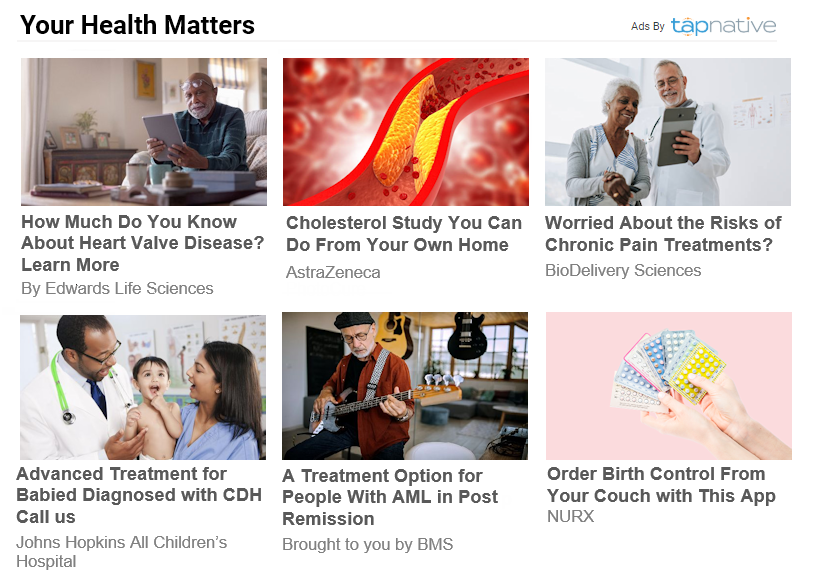
Native ads match the look and feel of the content around them. On a medical news site, a native ad might look like a headline and a short summary in the article feed. Because native ads respect the reading experience, they tend to earn more attention and higher engagement than banners. They work especially well for content-led messages such as clinical data, CME offers, educational articles and product explainers. Native ads should always be clearly labeled as sponsored, which protects both the reader and the publisher’s credibility.
Paid Search
Search reaches clinicians when they are actively looking for something, such as a drug’s dosing information, a billing service or an EMR comparison. That intent makes search very effective. The challenge is that search cannot confirm that the person searching is an HCP, and competitive healthcare and financial keywords can be among the most expensive in all of search advertising.
Email and E-Newsletters
Publishers, societies and data companies offer email programs to opted-in HCP lists, along with sponsorships inside daily or weekly clinical newsletters. Email is direct and measurable, but inbox fatigue is high and list quality varies widely.
HCP Professional Networks and Platforms
Physician-focused networks and clinical apps offer targeted messaging, sponsored content and in-app placements. They offer strong verification and engagement, and they are priced accordingly.
Paid Social
LinkedIn, Meta and other platforms allow targeting by job title and interest. Social works for recruiting, financial services and consumer brands, but targeting is less precise for clinical messaging, and pharma brands must work within strict compliance rules.
Point-of-Care and EHR Messaging
Some platforms place messages inside the EHR or clinical workflow, such as a reminder about a screening guideline or a savings card at the moment of prescribing. This is highly relevant and very close to the decision, but inventory is limited and pricing is at the premium end.
Video, Audio and Podcasts
Medical podcasts, video content and connected TV are growing. Clinicians listen during commutes and workouts, and sponsorships on respected podcasts can build trust. Scale is smaller than display, and measurement is less direct.
Print Journals and Direct Mail
Print is less dominant than it once was, but journal ads and direct mail still reach clinicians who read in print. Costs are high per reader and tracking is limited.
Conferences and Live Events
Booths, sponsored symposia and exhibit hall presence put brands face to face with clinicians. Events offer real conversation, but costs add up fast when you include booth space, travel, staff and materials.
Sales Representatives and Speaker Programs
In-person rep visits and peer-to-peer speaker programs remain powerful, especially in pharma and devices. They are also the most expensive way to reach a single clinician, and many practices now limit rep access.
Part 3: What It Costs
Pricing varies by specialty, targeting, publisher, volume and season. The ranges below are broad market estimates meant for general comparison, not quotes. Niche specialties and verified audiences always cost more.
| Channel | Typical Cost | Relative Cost | Effectiveness |
|---|---|---|---|
| Open web programmatic display (untargeted) | Low single-digit CPMs | Lowest | Cheap reach, but most impressions will not reach HCPs |
| NPI-targeted programmatic display | Roughly $20 to $75 CPM | Low to moderate | Scalable reach to a defined HCP list but you’re buying impressions, not views and not clicks. |
| Endemic publisher display | Roughly $40 to $150+ CPM | Moderate | Reaching clinicians in a professional context. Good if the placements are in-content. |
| Native advertising | Roughly $30 to $150+ CPM, or CPC pricing | Moderate | Engagement, content promotion, education. Best for lower funnel performance focused campaigns. |
| Paid social | Varies widely; LinkedIn is at the high end | Moderate | Recruiting, financial services, consumer brands |
| Paid search | Often $5 to $50+ per click in competitive categories | Moderate to high | Capturing active intent but not guaranteed to be HCPs |
| Email and newsletter sponsorships | Roughly $150 to $500+ CPM, or flat sponsorship fees | High | Direct, measurable outreach but no guarantee of seeing the offer, clicking it etc. You pay to send emails. |
| HCP networks and point-of-care | Premium CPMs and custom packages | High | Verified audiences and moments of decision. Good option. |
| Print journals and direct mail | Thousands to tens of thousands per placement | High | Specialty audiences who still read print. No guarantee the offer will enter the optic nerve. |
| Conferences and events | Tens of thousands to six figures per event | Very high | Face-to-face relationships. Good choice. |
| Sales reps and speaker programs | Often hundreds of dollars per interaction | Highest | High-value products and complex sales. |
The Cheapest Option Is Not Always the Lowest Cost
CPM tells you what it costs to show an ad. It does not tell you what it costs to reach the right clinician and get a response. An untargeted display campaign might cost very little per thousand impressions, but if only a small share of those impressions reach HCPs, the true cost per clinician reached can end up higher than a premium endemic buy.
A more useful way to compare channels is cost per meaningful outcome: cost per verified HCP reached, cost per engaged clinician, cost per CME completion, or cost per qualified lead.
What Tends to Work
A few patterns hold across most categories:
- Context matters. Clinicians respond better to ads that appear where they are already reading professional content.
- Useful beats loud. Messages that teach something, save time or solve a practice problem outperform generic brand ads.
- Native generally outperforms banners on engagement. Because native ads fit the reading experience, they usually earn more attention per dollar than standard display.
- Combining channels helps. Search captures intent, native and display build awareness and consideration, and email or events deepen relationships. Most successful programs use several channels together.
- Verification protects the budget. Paying a premium for verified HCP audiences often costs less in the end than paying for impressions that never reach a clinician.
The Bottom Line
The HCP audience is one of the most valuable and competitive audiences in advertising, and the list of brands trying to reach it keeps growing. Pharma and devices lead in spending, but medical publishers, societies, software companies, AI developers, billing services, recruiters, financial firms and consumer brands are all in the mix.
For any of these marketers, the goal is the same: reach the right clinicians in the right context with a message worth their time. Channels that respect how clinicians actually read and work, such as native advertising on trusted healthcare publishers, give brands a strong chance to do exactly that.